
The 'Internet of Things' Is Sending Us Back to the Middle Ages
 Internet-enabled devices are so common, and so vulnerable, that hackers recently broke into a casino through its fish tank. The tank had internet-connected sensors measuring its temperature and cleanliness. The hackers got into the fish tank’s sensors and then to the computer used to control them, and from there to other parts of the casino’s network. The intruders were able to copy 10 gigabytes of data to somewhere in Finland. By gazing into this fish tank, we can see the problem with “internet of things” devices: We don’t really control them. And it’s not always clear who does – though often software designers and advertisers are involved...
- Login to post comments
Critical Bluetooth Flaws Put Over 5 Billion Devices At Risk Of Hacking
 Bluetooth is one of the most popular short-range wireless communications technologies in use today and is built into many types of devices, from phones, smartwatches and TVs to medical equipment and car infotainment systems. Many of those devices are now at risk of being hacked due to critical flaws found in the Bluetooth implementations of the operating systems they use. Over the past several months, a team of researchers from IoT security firm Armis have been working with Google, Microsoft, Apple and Linux developers, to silently coordinate the release of patches for eight serious vulnerabilities that could allow attackers to completely take over Bluetooth-enabled devices or to hijack their Internet traffic.
- Login to post comments
Experts Say IBM Watson’s Flaws are Rooted in Data Collection and Interoperability
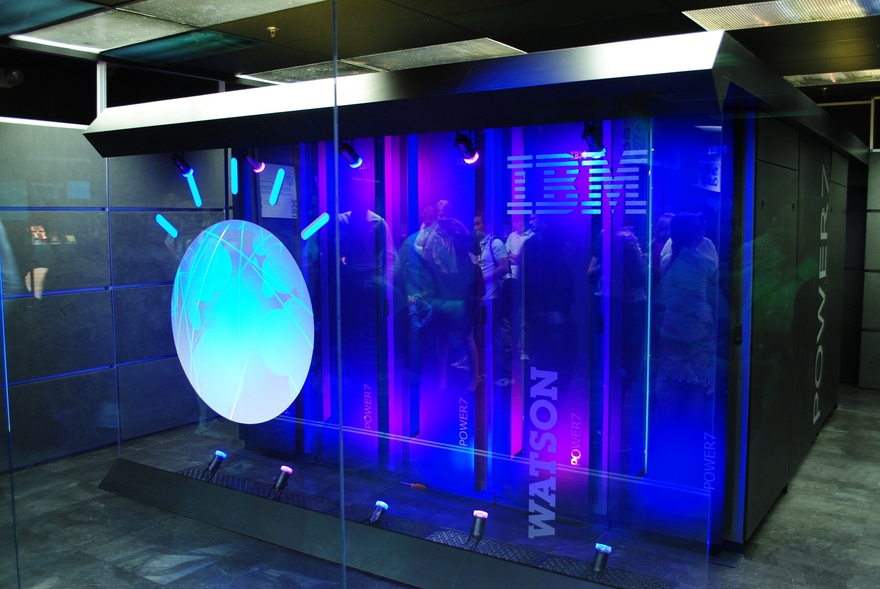 Despite being backed by a significant budget and the marketing power of a major technology company, IBM Watson appears to be falling short of expectations when it comes to revolutionizing cancer care. The shortcomings of IBM’s premier artificial intelligence system—made famous by its appearance on Jeopardy in 2011 and later co-pted to provide support for oncologists—are linked to a number of factors, according to an in-depth investigation by Stat that included interviews with doctors and artificial intelligence experts from around the world...
- Login to post comments
Hurricane Irene Highlights Life-Saving Potential of Mobile EMRs
Watching the East Coast prepare for Hurricane Irene last weekend had me flashing back to the aftermath of the tornadoes that hit Joplin, Missouri, earlier this year. Would hospitals suffer the same levels of destruction that St. John’s Regional Medical Center did? Would they be as successful in evacuating patients and treating them off-site with limited supplies and infrastructure?...
- Login to post comments
Better Tech Is Here for Healthcare
 Better technology is out there serving other industries … and it can be applied in healthcare. Technology should ease administrative loads and put clinicians back in front of patients! I’ve talked about some of this previously and how we keep clinicians involved in our design process. When it came to building an entirely new EHR, the driving force behind our team researching and adopting new technologies was to imagine a clean slate...
- Login to post comments
Interoperability by Design: FDA Issues New Final Guidance for Connected Medical Devices
 The FDA is focusing on safety and effectiveness of interconnected medical devices with the issuance of final guidance on medical device interoperability, released last week. As the FDA notes, medical devices are becoming increasingly connected to one another and to other technologies, and it is critical to address their ability to exchange and use information safely and effectively. For device manufacturers, this guidance provides clarity on how the FDA is thinking about interoperability and patient safety in the premarket submission process and provides considerations for manufacturers in the development and design of interoperability medical devices...
- Login to post comments
What Harvey Is Teaching the Health Care Sector About Managing Disasters
 The damage inflicted by Hurricane Harvey has posed enormous health challenges in Houston and neighboring areas hit hard by the storm. As regional medical director of emergency medicine for the Houston Methodist Hospital System, one of us (Neil) has been on the front lines of the medical response. The other (Ranu) has been involved in responses to such public health disasters as the Ebola crisis in Africa, Hurricane Katrina in Louisiana, and the 2010 earthquake in Haiti. The response to Harvey is ongoing, but there are early lessons that could help governments and health systems in dealing with the aftermath of Hurricane Irma and other major catastrophes down the road...
- Login to post comments
NHS Swindells Urges Vendors to Take Open Approach to Data
In his keynote address to the 2017 Health and Care Innovation Expo, Matthew Swindells said software providers should “not be protective about ‘your’ data – the data belongs to the patient”. He continued: “If the patient wants you to share what you’ve got with another clinician who’s treating them, I don’t want to see vendors locking the data down, and I don’t want to see hospitals treating patient data as if it were some sort of market opportunity.”...
- Login to post comments
Providers Spend More Time in Front of Computers than Patients, Study Concludes
 Primary care physicians spend more than half of their workdays in front of computer screens, reducing the amount of time they spend with patients, according to a new study by the University of Wisconsin and the American Medical Association (AMA). During a typical 11.4-hour workday, primary care physicians spent an average of 5.9 hours on data entry and other tasks with electronic health records (EHR) systems during and after clinical hours, researchers found...
- Login to post comments
Creating a Knowledge Infrastructure for the ‘Learning Health System’
 The idea that the healthcare industry can study the data being created in electronic health records (EHR) to foster ongoing improvement is not a new one, but it is gaining momentum. A “learning health system” is one that commits to the use of data as a byproduct of care for continuous learning. Clinicians and health system researchers want to tackle perhaps their industry’s most significant knowledge management challenge: how to capture the results of research into clinical best practices and more quickly feed it back to doctors and nurses at the point of care...
- Login to post comments