
How Can Chatbots Help Us Respond to Humanitarian Crisis?
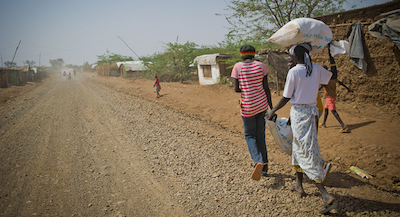 At the moment, The World Food Programme (WFP) and the wider humanitarian system are #FightingFamine in four countries. In Somalia, Yemen, North-Eastern Nigeria and South Sudan 20 million people are on the brink of starvation. Our recent study “At the Root of Exodus” found that high levels of food insecurity lead to higher levels of migration across borders; UNHCR estimates that there are 65.6 million people forcibly displaced worldwide. The stakes are high, we need all the information we can get...
- Login to post comments
The Shame of US Health Care Dysfunction: Hookworm Returns to Alabama
 An article just published online(1), and reported so far in only one major media outlet (the Guardian, based in the UK) showed how hookworm, now considered a disease of poor, third world countries, has returned to the American south. This in a country which spends more per capita on health care than any other supposedly developed country. A 2009 article in Health Affairs documented the supposed elimination of common diseases once found in US.(2) The background of the article included...
- Login to post comments
The First Count of Fentanyl Deaths in 2016: Up 540% in Three Years
Drug overdoses killed roughly 64,000 people in the United States last year, according to the first governmental account of nationwide drug deaths to cover all of 2016. It’s a staggering rise of more than 22 percent over the 52,404 drug deaths recorded the previous year — and even higher than The New York Times’s estimate in June, which was based on earlier preliminary data. Drug overdoses are expected to remain the leading cause of death for Americans under 50, as synthetic opioids — primarily fentanyl and its analogues — continue to push the death count higher...
- Login to post comments
A Tale of Two Epidemics — HCV Treatment among Native Americans and Veterans
In light of ongoing debates about health care budgets and rising drug prices, a current public health crisis can provide useful insights. For patients who get their health care through two separate federal agencies, the hepatitis C virus (HCV) epidemic is unfolding in vastly different ways. In recent years, the Department of Veterans Affairs (VA) health care system has mounted a response to HCV that should be the envy of any health system, public or private. On the other hand, the Indian Health Service (IHS), an agency that serves American Indians and Alaska Natives, is struggling to meet the needs of its patients with HCV...
- Login to post comments
Don't Believe the Hype, AGPL Open Source Licensing Is Toxic and Unpopular
Reading Black Duck Software's newest paean to the Affero General Public License (AGPL) ("The Quietly Accelerating Adoption of the AGPL"), one could be forgiven for thinking AGPL is rocking the open source licensing planet. After all, Black Duck executive Phil Odence laced his post with fancy charts showing explosive growth of the license, ultimately declaring the AGPL "very popular," and a license his firm sees frequently in audits. Maybe, maybe not...
- Login to post comments
Using 3D Printers to Tackle Gaza's Medical Shortages
The stethoscope, a staple device in modern medicine, is a luxury item in Gaza. At Gaza's largest hospital, al-Shifa, there are only one or two stethoscopes in each department; doctors left without one resort to pressing their ears against patients' chests to diagnose an illness. "That would be the best-case scenario," Canadian doctor Tarek Loubani told Al Jazeera. "If someone's full of blood, most doctors aren't going to put their ears to the chest. So, doctors are making decisions without that piece of information."...
- Login to post comments
Will Flooding in Texas Lead to More Mosquito-Borne Illness?
The devastating floodwaters from Hurricane Harvey will damage many human habitats, but after the flood recedes, the waterlogged city may become a more welcoming habitat for mosquitoes. And that means that residents already made vulnerable by the hurricane might also eventually be at increased risk for mosquito-borne diseases like West Nile virus and Zika. West Nile virus has been endemic in Texas since 2002. In 2016, the state had 370 cases; so far in 2017, there have been 36 confirmed cases. Harris County, where Houston is located, has seen cases of West Nile in humans this year, and detected the virus in local mosquitoes...
- Login to post comments
Elsevier Acquisition Highlights the Need for Community-based Scholarly Communication Infrastructure
 Like many others in the scholarly community, we were very disappointed to learn about the recent acquisition by Elsevier of bepress, the provider of the popular Digital Commons repository platform. The acquisition is especially troubling for the hundreds of institutions that use Digital Commons to support their open access repositories. These institutions now find their repository services owned and managed by Elsevier, a company well known for its obstruction of open access and repositories...
- Login to post comments
Harvey Evacuees Leave Their Belongings—and Health Records—Behind
Digitizing the world's medical records was supposed to make doctors' lives easier and patients' lives longer. But unlike banking and shopping, medicine has had a rough time transitioning to the new digital order. Because health care providers use different systems for their electronic health care records, it’s still difficult for a patient’s data to follow them through the medical ecosystem...
- Login to post comments
Open Data Highlights Post-Harvey Mosquito Health and Safety Threat
Cities in southeastern Texas finally saw dry weather on Wednesday, after days of unprecedented rainfall from Hurricane Harvey. But while floodwaters started receding from many Houston neighborhoods, explosions at a Crosby chemical plant and Beaumont’s lost water supply showed how vulnerable the area remains to health and safety threats. Among these post-Harvey issues, storm-related flooding could increase risk for diseases spread by mosquitoes, which breed in standing water...
- Login to post comments