
OSEHRA Innovation Webinar: Using TRM Approved Software to Load Synthetic Patients into VistA for Testing
This webinar will demonstrate how to use the VistA FHIR Data Loader to import synthetic patients created using Synthea™ into VistA. It will also showcase how to use the OSEHRA Synthea Visualizer to create a visualization of each synthetic patient's data in a longitudinal format, allowing users to decide which patients to import into a VistA instance.
- Login to post comments
OSEHRA Organizational Meeting
Mark your calendars for an important upcoming virtual community meeting. Please plan to join us Friday, August 16 at 1:00PM ET for an open community call. As most of you know, the U.S. Department of Veterans Affairs terminated funding for OSEHRA in early 2018. Since that time, the Board of Directors and staff have been actively working on organizational and funding options.
- Login to post comments
Mr Fax goes to Washington D.C.
 Recently, I had the honor of travelling to Washington D.C. to speak on behalf of a substantive and important policy issue, digital cloud fax technology (DCFT) and interoperability in the health care industry. Federal officials are on a mission to create a seamless exchange of personal health information (PHI) and electronic health records (EHR). That's the layman's definition of interoperability. Although I am a layman on Capitol Hill, J2 Global Inc (J2), a provider of eFax Cloud Services remains a champion for DCFT. We are a key player in the field and we used our influence to educate federal officials about an issue that is extremely important to us and to our customers. Specifically, we were there to speak about a proposed rule from the Centers for Medicare & Medicaid Services (CMS).
- Login to post comments
It Takes Years To Fully Recover From Big Storms Like Sandy
 The 2012 hurricane widely known as Superstorm Sandy left at least an estimated 325,000 New Jersey homes damaged or destroyed. Nearly seven years later, many of the New Jersey residents who have not fully recovered have to fend for themselves. The government funding has mostly dried up. Only two nonprofits that help survivors remain engaged...While researching the recovery efforts after Sandy, I have found that up to a third of the 2.5 million people who live in Keansburg, Belmar, Toms River and other places along the New Jersey coastline and back bays struck by the storm had not fully recovered from this disaster by October 2017 - five years later. Today, almost seven years after the storm, a lack of data and the patchwork of assistance programs make it difficult to fully assess what remains to be done.
- Login to post comments
Americans Focus On Responding To Earthquake Damage, Not Preventing It, Because They Are Unaware Of Their Risk
 On July 4 and 5, two major earthquakes, followed by several thousand smaller ones, struck Southern California. Their size and the damage they caused captured attention around the country. What tends to get much less notice from the public is what can be done to prevent catastrophic damage from big quakes. Had the epicenter of these latest large California earthquakes been closer to downtown Los Angeles, tens of thousands of apartment buildings could have been damaged or collapsed. Consequently, structural engineers are calling on legislators to prepare for and prevent earthquake damage by crafting new and improved building codes...
- Login to post comments
IBM Donates Artificial Intelligence Cancer-Killing Drug Project to the Open Source Community
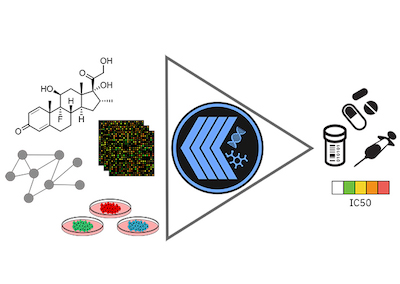 IBM has released three artificial intelligence (AI) projects tailored to take on the challenge of curing cancer to the open-source community. At the 18th European Conference on Computational Biology (ECCB) and the 27th Conference on Intelligent Systems for Molecular Biology (ISMB), which will be held in Switzerland later this month, the tech giant will dive into how each of the projects can advance our understanding of cancers and their treatment...The first project, dubbed PaccMann -- not to be confused with the popular Pac-Man computer game -- is described as the "Prediction of anticancer compound sensitivity with Multi-modal attention-based neural networks."...
- Login to post comments
OSEHRA Innovation Webinar Features VistA Programming Enhancements
OSEHRA’s July Innovation Webinar will focus on VPE, a set of VistA Programming Utilities that aid in the navigation and development of code in either VistA or RPMS. While VPE was initially designed with VistA in mind, it can also be effective in other MUMPS environments. This Webinar will give you an update on VPE, focusing particularly on the new features of VPE v15.
- Login to post comments
Is Scholarly Use of R Beating SPSS Already?
 One of us (Muenchen) has been tracking The Popularity of Data Science Software using a variety of different approaches. One approach is to use Google Scholar to count the number of scholarly articles found each year for each software. He chose Google Scholar since it searches "across many disciplines and sources: articles, theses, books, abstracts, and court opinions, from academic publishers, professional societies, online repositories, universities, and other web sites." Figure 1 shows the results from 1995 through 2016. Data collected in 2018 showed that while SPSS use dropped 39% drop from 2017 to 2018, its use was still 66% higher than R in 2018. Read More »
- Login to post comments
How Can Information and Communications Tech Help in Disaster Preparedness and Response?
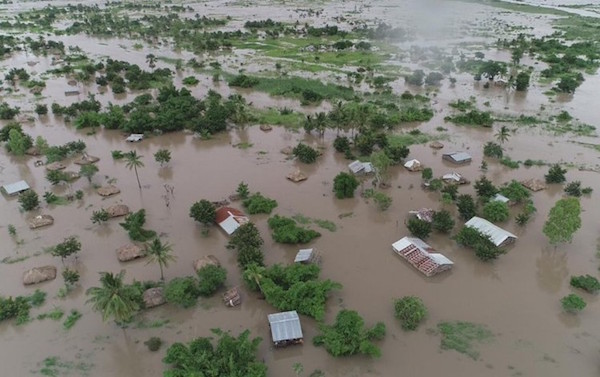 n the immediate aftermath of disasters, timely and effective information is critical for the decision-making process. Information and Communication Technologies (ICTs) play a significant role in mitigation, preparedness, response, and rehabilitation by facilitating the flow of vital information in a timely manner. To deliver and deploy telecommunications / information and communication resources (transportable, easy to deploy and reliable systems that are non-exclusive) in a timely manner in the event of disasters, the ITU has designed the ITU Framework for Cooperation in Emergencies (IFCE). Innovative technologies such as robotics, drone technology, GIS, and emerging technologies like artificial intelligence (AI), the Internet of Things (IoT), cloud computing and Big Data are transforming the complex process of disaster management.
- Login to post comments
Pandemic and all-hazards preparedness, response law emboldens U.S. disaster recovery efforts
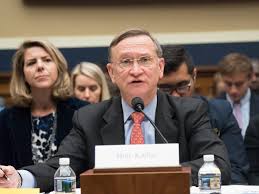 The Pandemic and All-Hazards Preparedness and Advancing (PAHPA) Innovation Act, S. 1379, became law on Monday with the president's signature, prompting accolades from national stakeholders, company executives and federal lawmakers. The far-reaching law ensures the United States will be better prepared to respond to a wide range of public health emergencies, whether man-made or occurring through a natural disaster or infectious disease. Overall, the law aims to bolster the nation's health security strategy, strengthen the country's emergency response workforce, prioritize a threat-based approach, and increase communication across the advanced research and development of medical countermeasures (MCMs), among numerous provisions contained in the law.
- Login to post comments