
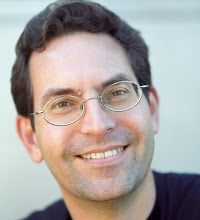
 At HIMSS, I listened carefully to payers, providers, patients, developers, and researchers. Below is a distillation of what I heard from thousands of stakeholders. It is not partisan and does not criticize the work of any person in industry, government or academia. It reflects the lessons learned from the past 20 years of healthcare IT implementation and policymaking. Knowing where we are now and where we want to be, here are 10 guiding principles.
Doomsday Prep for the Super-Rich
Evan Osnos | The New Yorker | January 30, 2017
Steve Huffman, the thirty-three-year-old co-founder and C.E.O. of Reddit, which is valued at six hundred million dollars, was nearsighted until November, 2015, when he arranged to have laser eye surgery. He underwent the procedure not for the sake of convenience or appearance but, rather, for a reason he doesn’t usually talk much about: he hopes that it will improve his odds of surviving a disaster, whether natural or man-made. “If the world ends—and not even if the world ends, but if we have trouble—getting contacts or glasses is going to be a huge pain in the ass,” he told me recently...
- Login to post comments
Amazon Web Services Outage Reveals Critical Lack of Redundancy Across the Internet
Nat Levy | Geek Wire | February 28, 2017
The digital snow day is over, as Amazon Web Services has fixed the issues with its Simple Storage Service, or S3 for short, that crippled significant chunks of the internet Tuesday. Starting a little after 9:30 a.m. Pacific time Tuesday, and lasting close to five hours, the S3 cloud storage service started experiencing “high error rates.” This outage knocked out access to a litany of websites and apps that run on AWS, including but not limited to Expedia, Slack, Medium, the U.S. Securities and Exchange Commission. The outage even temporarily affected the AWS service health dashboard, which displays outages and events...
- Login to post comments
Halamka's Next Steps for the National Healthcare IT agenda
By John D. Halamka, MD | March 1, 2017
- Login to post comments
Top 3 blockchain-based healthcare companies to watch in 2017
Peter B. Nichol | CIO | December 13, 2016
Game theory is the science of strategy. A branch of mathematics and economics that explores strategic situations across multiple stakeholders with different goals, whose actions can affect one another. Pioneering companies are changing the game with blockchain technologies. The new game of consumer interactions redefines transparency, immutability and security across industries. Much progress has been made with game theory. John von Neumann and Oskar Morgenstern’s 1944 book Game Theory and Economic Behavior outlined classic game theory...
- Login to post comments
How to Get Patients to Take More Control of Their Medical Decisions
Laura Landro | Wall Street Journal | February 28, 2017
For years, people have been urged be more active in their own care. Now providers are giving them better tools to make that happen. They’re told they need to do more to monitor their chronic conditions. They are directed to be more active in deciding what treatments to have, or whether to treat a condition at all. That has proved easier said than done. For some people, it’s a matter of feeling intimidated: Better to let the doctors decide. Some are overwhelmed by the choices they have to make about their care, which seem to get more complex every year. At the same time, many doctors are reluctant to change old ways of working...
- Login to post comments
Top 10 FOSS Legal Stories in 2016
By Mark Radcliffe | February 28, 2017
 The year 2016 resulted in several important developments that affect the FOSS ecosystem. While they are not strictly "legal developments" they are important for the community. For one, Eben Moglen, the general counsel of the Free Software Foundation, stepped down. Eben has been a leader on FOSS legal issues since the late 1990s and has been critical to the success of the FOSS movement. The FOSS community owes him a huge debt of gratitude, and I expect that he will continue to be active in the FOSS community. The success of FOSS adoption was dramatically illustrated when Microsoft joined the Linux Foundation and summarized in the article, Open Source Won. So, Now What? in Wired magazine...
- Login to post comments
Tips for Non-Native English Speakers Working on Open Source Projects
By Masayuki Igawa | February 28, 2017
 The primary language of most open source projects is English, but open source users and contributors span the globe. Non-native speakers face many communication and cultural challenges when participating in the ecosystem. In this article, we will share challenges, how to overcome them, and best practices for easing onboarding of non-native speakers, as non-native English speakers and contributors to OpenStack. We are based in Japan, Brazil, and China, and work daily with the huge OpenStack community that is spread around the world. The official language of OpenStack is English, which means we communicate daily as non-native speakers...
- Login to post comments
AMA CMIO: EHRs Are Falling Short of Meeting the Needs of Doctors
Henry Powderly | Healthcare IT News | February 21, 2017
Health IT vendors are still missing the mark when it comes to answering the needs of America’s burnt-out physicians. “This is not about putting our hands up and saying stop innovation,” said Michael Hodgkins, MD, vice president and chief medical information officer at the American Medical Association. “It is simply about the need to focus on evidence, accuracy, how it’s integrated with our EHRs and how it’s integrated within our practice”...
- Login to post comments
Australian Teenage Science Prodigys Discover Ways to Reduce Antibiotic Resistance, Among Other "Phenomenal" Findings
Kimberley Le Lievre | The Canberra Times | February 12, 2017
Teenagers across Australia are producing scientific findings that could potentially change the way we live and the world we live in. One of the country's brightest young minds has developed a way to make bacteria less resistant to antibiotics. Another has created six new types of bioplastic including one which decomposes at 300 times faster than plastic. Two brothers have come up with a laser device to make road cycling safer...
- Login to post comments
Can We Engage Private Pharmacies To Help Control Drug-Resistant Tuberculosis?
Judy Stone | Forbes | February 13, 2017
Antibiotic resistance and infectious diseases have long been high on my list of things to worry about, with multi-drug-resistant tuberculosis vying for top honors. In 2015, 10.4 million people became ill with tuberculosis, and 1.8 million died, making TB one of the top causes of death globally. Six countries account for 60% of the cases: China, India, Indonesia, Nigeria, Pakistan and South Africa. As I noted in a previous post, India is critically important to control of drug resistance as well as tuberculosis, as it has the highest TB burden, with 2.2 million infections annually, as well as the largest antibiotic consumption...
- Login to post comments
Copyright ©2011-2020 Open Health Marketplace, LLC. All Rights Reserved.