
 Two remarkable articles -- one on placebos, one on informed consent -- caught my attention. To set them up, a famous, perhaps apocryphal, story: A scientist tried to explain the solar system to a lay audience. When he finished, a skeptical woman told him he was wrong: the earth was flat, and rested on the back of a giant turtle. The scientist asked her what the turtle rested on. "Another turtle," she replied confidently. He then asked what that turtle was on. The woman would have none of it. "You can ask all you want, sir, but it's turtles all the way down." Faith is a funny thing. Especially in health care. Let's start with placebos...
OSEHRA 2017: Open Source Becomes Mainstream in the Healthcare Industry
By David Perara | July 13, 2017
 One of the most exciting things about the OSEHRA 2017 Open Source Summit was to see so many leading edge open source health IT solutions, and to hear reports of the major strides they are making around the world. Our very own Editor-in-Chief, Roger A. Maduro gave a presentation on the state of open health IT. The room was absolutely packed, with standing room only. Maduro started his presentation by pointing out that during the recent HIMSS17 conference in Orlando, Florida, more than half of of the 300 sessions of the conference were based on open source solutions such as FHIR, Blockchain, Interoperability and the open/modular IT strategy being followed by Medicaid.
- Login to post comments
What We (Think We) Know about Meritocracies
By Bryan Behrenshausen | July 13, 2017
 "Meritocracy," writes Christopher Hayes in his 2012 book Twilight of the Elites, "represents a rare point of consensus in our increasingly polarized politics. It undergirds our debates, but is never itself the subject of them, because belief in it is so widely shared." Meritocratic thinking, in other words, is prevalent today; thinking rigorously about meritocracy, however, is much more rare. That kind of unspoken consensus—however tenuous and fraught in practice—makes tracing and tracking something called "meritocracy" all the more important. And indeed, interest in meritocracy as an explicit object of analysis and debate is intensifying, particularly in discussions examining open-style organizational designs and leadership practices...
- Login to post comments
In Healthcare, It's Placebos [Almost] All the Way Down
By Kim Bellard | July 12, 2017
- Login to post comments
OSEHRA 2017: Microsoft, OpenStack, IBM Support VistA in the Cloud
By David Perara | July 12, 2017
This year’s OSEHRA 2017 Open Source Summit proved to be another major milestone in the transition from locked-in vendor-controlled health information technology to an open solutions approach. One of the major news stories at the summit was the decision by Microsoft to join OSEHRA and collaborate with the Open Health community. Another major presentation was that of Martin Rice, Director of the Division of State System for the Centers for Medicare and Medicaid Services (CMS) and Clyneice Chaney, Principal Systems Engineer. In their presentation (video* and PowerPoint*), Rice and Chaney described how CMS is transitioning to an open/modular approach to State Medicaid IT systems.
- Login to post comments
Addressing Open Source's Free Rider Problem
By Chad Whitacre | July 11, 2017
 Nadia Eghbal, in her major report on the state of our digital infrastructure, and Jonathan Lister, in his response describing our digital ecosystem, both point to a tragedy of the commons in open source software. While some projects are sustainable, many still struggle with "a free rider problem." As Nadia puts it: "Resources are offered for free, and everybody (whether individual developer or large software company) uses them, so nobody is incentivized to contribute back, figuring that somebody else will step in"...
- Login to post comments
An Introduction to Libral, a Systems Management Library for Linux
By David Lutterkort | July 10, 2017
 Linux, in keeping with Unix traditions, doesn't have a comprehensive systems management API. Instead, management is done through a variety of special-purpose tools and APIs, all with their own conventions and idiosyncrasies. That makes scripting even simple systems-management tasks difficult and brittle. For example, changing the login shell of the "app" user is done by running usermod -s /sbin/nologin app. This works great until it is attempted on a system that does not have an app user. To fix the ensuing failure, the enterprising script writer might now resort to...
- Login to post comments
Law for All: Free Law Project’s Radical Approach to Legal Transparency
By Jennie Rose Halperin | July 9, 2017
 What does open access look like for the law? Through free access to primary legal sources, the Free Law Project provides an important service to advocates, journalists, researchers, and the public. Joining with an international movement for Free Access to Law, the US-based organization helps people know their rights in an increasingly uncertain and rapidly changing legal era. The Free Law Project is an umbrella organization for a variety of projects, including Court Listener for millions of pieces of legal data, the RECAP project (begun by Aaron Swartz in 2009) to freely open the PACER archive of legal data, a complete repository of Supreme Court Data, a repository of judicial opinions and seals, and a Free Law Reporters Database...
- Login to post comments
A New Android App for Teaching Kids How to Read
By Don Watkins | July 8, 2017
 Have you been looking for software to help your child to read? Well, your quest may be over. Phoenicia is a new literacy application for Android developed by Michael Hall, an open source software developer, community manager, and technology evangelist currently working at Canonical, maker of Ubuntu. In this interview, he talks about the diagnosis of his oldest child with an Autism Spectrum Disorder, his learning curve of Android development, and why user testing matters more than you think...
- Login to post comments
A Lesson in Accountability from My Uber Driver
By Sam Knuth | July 7, 2017
 The first thing I noticed was how nice Kyle's car was. It wasn't too fancy (a late model Toyota Camry) but inside it was spotless. We were sitting in leather seats. On the back of the passenger seat, Kyle had mounted a tablet customers could use to watch TV if they wanted (not that I was particularly interested in television during this 4:30 a.m. ride to the airport). I told Kyle how nice I thought his car was when he offered me a bottle of water. This started a conversation in which I learned a lot about Kyle—and gleaned a 22 minute lesson in what it's like to truly take accountability for your career in an open organization...
- Login to post comments
Halamka's Reflections on US Health IT Policy Trajectory
By John D. Halamka, MD | July 6, 2017
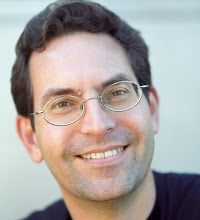 I’m in China this week, meeting with government, academia, and industry leaders in Guangzhou, Shenzhen, Beijing, Shanghai, and Suzhou. The twelve hour time difference means that I can work a day in China, followed by a day in Boston. For the next 7 days, I’ll truly be living on both sides of the planet. I recently delivered this policy update about the key developments in healthcare IT policy and sentiment over the past 90 days. I’ve not written a specific summary of the recently released Quality Patient Program proposed rule which provides the detailed regulatory guidance for implementation of MACRA/MIPS, but here’s the excellent 26 page synopsis created by CMS which provides an overview of the 1058 page rule...
- Login to post comments
Copyright ©2011-2020 Open Health Marketplace, LLC. All Rights Reserved.