
open source
See the following -
How Praekelt.org and Open Source Provide Critical Services to Enable Social Change
 In Eastern and Southern Africa, women are still dying unnecessarily during the basic, natural act of giving life. According to Unicef, “In 2010, close to 58,000 women lost their lives during pregnancy and childbirth, accounting for more than one fifth of all such deaths in the world.” Gustav Praekelt, founder of the South African design and development firm Praekelt.com, was deeply affected by the high maternal mortality rate in his country and realized in 2007 that open source software and mobile phones could help provide critical information and services to combat poverty and maternal mortality rates -- among other social issues -- across the continent and potentially around the world.
- Login to post comments
How Radical Transparency Is Transforming Open Source Healthcare Software
 At Tidepool, where I work as a Community and Clinic Success Manager, the company's mission is to make diabetes software more accessible, meaningful, and actionable. Operating in the open is how we achieve that. Tidepool's diabetes management software is an open source platform free for both clinicians and people impacted by diabetes. And, because the company is a nonprofit, it also operates according to the transparency rules that govern 501(c)(3) organizations.
- Login to post comments
How San Francisco Can Get Its Gov 2.0 Groove Back
Despite having one of the nation’s first open source procurement policies, initiated by former mayor Gavin Newsom in 2009, you’d be hard-pressed to find a line of code that’s not proprietary. One SF official once told me he almost lost his job advocating for the city’s use of open source software.
- Login to post comments
How SAP Embraced R.
SAP has joined the list of big companies embracing the R language. SAP has committed it’s latest products including the in-memory device HANA and the newly launched Business Objects Predictive Analytics to be tightly integrated with the algorithms and statistical libraries available in R... Read More »
- Login to post comments
How Scientists Are Using Digital Badges
 The open source world pioneered the use of digital badges to reward skills, achievements, and to signal transparency and openness. Scientific journals should apply open source methods, and use digital badges to encourage transparency and openness in scientific publications. Girl Scouts and Boy Scouts know all about merit badges. Scouts earn merit badges by mastering new skills. Mozilla Open Badges is a pioneer in awarding digital merit badges for skills and achievements. One example of a badge-issuing project is Buzzmath, where Open Badges are issued to recognize progress in mathematics to students, or anyone wanting to brush up on their skills...
- Login to post comments
How Scientists Tackle NASA's Big Data Deluge
Every hour, NASA's missions collectively compile hundreds of terabytes of information, which, if printed out in hard copies, would take up the equivalent of tens of millions of trees worth of paper. Read More »
- Login to post comments
How The 'Internet Of Things' Can Spark An Open Source Community
Ninja Blocks puts a power into the hands of developers and users that has never been realized before, and which could be the genesis of an open source community of makers. Read More »
- Login to post comments
How the Federal Reserve Bank of New York Navigates the 'Supply Chain' of Open Source Software
Large companies have divisions and subsidiaries that make efficient organizational management a challenge. Perhaps no one recognizes that more than Colin Wynd, vice president and head of the Common Service Organization at the Federal Reserve Bank of New York. Wynd is charged with ensuring that software development practices and strategy are forward-thinking and secure, and adhere to compliance regulations. Several years ago, Wynd and his team started to think more holistically about how their developer teams worked, he explained in a presentation at the recent Jenkins World conference in San Francisco...
- Login to post comments
How The First Internet President Produced The Government’s Biggest, Highest-Stakes Internet Failure
Obama ran a perfect digital campaign — but he couldn’t control the federal contractors. Now Healthcare.gov imperils ObamaCare. Read More »
- Login to post comments
How the Open Source Makers Revolution is Continuing…
If you’re not considering ways to be involved with open source hardware and software, and the implications it has, then you might find you’re not only being left behind by competitors, but by your customers… Read More »
- Login to post comments
How the University of Hawai'i Is Solving Today's Higher Ed Problems
 Openness invites greater participation and it takes advantage of the shared energy of collaborators. The strength of openly created educational resources comes paradoxically from the vulnerability of the shared experience of that creation process. One of the leaders in Open Educational Resources (OER) is Billy Meinke, educational technologist at the University of Hawai'i at Manoa. The University's open creation model uses Pressbooks, which Billy tells me more about in this interview...
- Login to post comments
How The World’s First Open Source MRI Happened
You wouldn’t think that a hang gliding accident could start a revolution in medicine. But when a teenager fell 150 feet into a lake several years ago, the subsequent events that sparked a revolutionary new diagnostic method, what I am calling the first open source MRI. Read More »
- Login to post comments
How Time-series Databases Help Make Sense of Sensors
 Infrastructure environments' needs and demands change every year and systems become more complex and involved. But all this growth is meaningless if we don't understand the infrastructure and what's happening in our environment. This is where monitoring tools and software come in; they give operators and administrators the ability to see problems in their environments and fix them in real time. But what if we want to predict problems before they happen? Collecting metrics and data about our environment gives us a window into how our infrastructure is performing and lets us make predictions based on data. When we know and understand what's happening, we can prevent problems, rather than just fixing them...
- Login to post comments
How to Achieve Credibility in NHS Open Source IT Projects
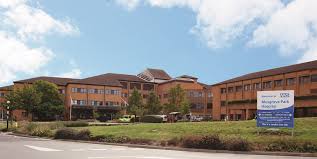 Taunton and Somerset NHS Foundation Trust’s clinical lead for electronic patient records explains how clinical engagement has helped make EPR an open source success. Anyone who knows me will know I am not very good with computers. Which may make me seem a curious choice to lead clinical engagement in an important IT implementation for our trust. Two years ago I took a step back from clinical practice as a consultant physician at Taunton and Somerset NHS Foundation Trust to work as chief clinical information officer and clinical lead for the implementation of an open source electronic patient record (EPR) system across the wards and departments of the trust’s Musgrove Park hospital...
- Login to post comments
How to Care for the Community Over the Code
 At All Things Open 2016, Joe Brockmeier answers the question: How can companies can work effectively with open source communities? In his talk, Joe reminded us of the #1 open source myth: Open source is comprised of mostly volunteers. The truth is, these days, pretty much any major open source project has people who are paid to work on it. There are always people who do it because they love it, but these days most of us are paid (and still love it). Over the years we have learned that if you want patches in a timely manner, you need people who are paid to do it...
- Login to post comments