
 More than two months after Hurricane Harvey submerged much of metropolitan Houston, recovery is under way across the city. Residents and volunteers are gutting and restoring flooded homes. Government agencies and nonprofit organizations are announcing cleanup programs and developing plans to distribute relief funds. But many questions remain about impacts on public health. What contaminants did floodwaters leave behind? How many people are being exposed to mold – which can grow rapidly in damp, humid conditions – as they repair their homes? Will there be an increase in Zika, West Nile or other vector-borne diseases as mosquito populations recover? Or an uptick in reported cases of other illnesses?...
News
We Have Seen the Future, and It Is...Estonia?
By Kim Bellard | November 19, 2017
 Like me, you may not have been paying close attention to what has been going on in Estonia. That's probably something many of us should change, at least anyone interested in our digital future(s). OK, I have to admit: I had to look Estonia up on a map. I knew it was in northern Europe, and that it had been involved in the whole U.S.S.R. debacle. As it turns out, Estonia sits just across the Gulf of Finland from -- that's right -- Finland, and across the Baltic Sea from Sweden. Skype was invented there, if you're keeping score. More to the point, over the last twenty years it has evolved into arguable the most advanced digital society in the world.
- Login to post comments
- News
FirstNet for Emergency Communications: 6 Questions Answered
By Ladimer Nagurney, and Anna Nagurney | November 17, 2017
 The system nicknamed FirstNet was created by Congress in the Middle Class Tax Relief and Job Creation Act of 2012. Under the contract with the government, the group led by AT&T will build, operate and maintain a new nationwide communications network, providing high-speed wireless communications for public safety agencies and personnel. The network will be protected against unauthorized intrusion and strong enough to withstand disasters that might damage other communications systems. Emergency workers will be able to preempt other users’ traffic on the network, and will be able to send and receive as much data as they need to during their emergency work...
- Login to post comments
- News
Why Social Media Apps Should Be in Your Disaster Kit
By Daniel P. Aldrich, and Courtney M. Page | November 15, 2017
 With floodwaters at four feet and rising, a family in Houston, Texas abandoned their possessions and scrambled to their roof during Hurricane Harvey to sit with their pets and await rescue. Unable to reach first responders through 911 and with no one visible nearby, they used their cellphones to send out a call for help through a social media application called Nextdoor. Within an hour a neighbor arrived in an empty canoe large enough to carry the family and their pets to safety. Thanks to a collaboration with Nextdoor, we learned of this and hundreds of similar rescues across Harvey’s path...
- Login to post comments
- News
Drones and the Future of Disaster Response
By Julie M. Smyth | November 14, 2017
 Four continental states and one U.S. territory took a beating this fall as one natural disaster after another rocked communities in Northern California and along the Gulf Coast, spreading disaster relief resources and personnel thin as federal, state, and local governments scrabbled to address the crises. Wildfires in California's wine country claimed at least 42 lives, 8,400 structures, and 245,000 acres of land in October. Hurricanes Harvey and Irma pummeled Louisiana, Texas, and Florida only to be followed by Hurricane Maria, which slammed Puerto Rico on September 20 and left much of the U.S. territory without communications systems, electricity, clean water, or functioning hospitals....
- Login to post comments
- Feature Story
Crisis Communication: Saving Time and Lives in Disasters through Smarter Social Media
By Terry Flew, and Axel Bruns | November 13, 2017
 As the worst bushfires seen for generations in New South Wales raged across the Blue Mountains, Southern Highlands and the Central Coast two years ago, people urgently needed fast, reliable information – and many turned to their phones to get it. The NSW Rural Fire Service was prepared with a smartphone app, Fires Near Me, which was downloaded almost 200,000 times. At the height of the fires, its Facebook page was recording more than a million views an hour. A social media campaign also helped the NSW Rural Fire Service Facebook community more than double from 120,000 to 280,000, while its Twitter reach jumped from 20,000 to 37,000 followers. Crucially, this helped to alert people to danger areas and places to avoid driving near...
- Login to post comments
- News
HLN's Report on Patient Centered CDS Learning Network Conference
By Noam H. Arzt, Ph.D. | November 11, 2017
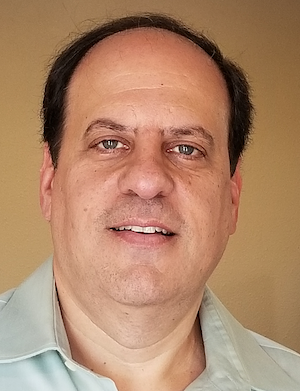 The Learning Network is an initiative funded by the Agency for Healthcare Research and Quality (AHRQ) whose goal is to encourage collaboration and development of tools and resources to support clinical decision support (CDS) as it relates to individual patients and their caregivers. This work is an offshoot of the Patient-Centered Outcomes Research (PCOR) initiative which focuses on the relationship between healthcare providers in patients in making better, more informed, healthcare decisions. A sister project to the Learning Network is the AHRQ-funded CDS Connect Repository which has begun to house shareable CDS artifacts which represent evidence-based standards of care.
- Login to post comments
- Feature Story
How a University's 3D-Printed Prosthetics Club Provides Devices for Amputees
By Emily Shannon | November 11, 2017
 Last fall, one of the co-founders of Duke University eNable published an article describing our club’s beginnings and visions for the future. In the spring of 2016, we started out as six engineering students with a passion for innovation and design, supported by a small stipend from the Innovation Co-Lab and a grant from OSPRI (Open Source Pedagogy, Research and Innovation), a project supported by Red Hat. Since then we have established ourselves as a presence on campus, grown into a large interdisciplinary team, and connected with multiple recipients—including a young boy in Milot, Haiti. The resources offered through Duke and the sponsorship we've received allow us to continuously transform our ideas into things we can share with open source enthusiasts, makers, and dreamers alike...
- Login to post comments
- News
Developing Nations Improving Health Communication Through the Use of DHIS2 (Part 1)
By Julie M. Smyth | November 10, 2017
DHIS2 implementations are spreading steadily among national health services in developing countries as well as among international non-governmental organizations (NGOs) working to improving health in the developing world through the use of health information technology. As an open source solution, DHIS2 offers developing countries the advantage of adopting a cost-effective and flexible solution for aggregate statistical data collection, validation, analysis, management, and presentation as well as for data sharing between healthcare professionals and facilities. Organizations and individuals who work with humanitarian software solutions will need to know what DHIS2 is, how it works, and how it might be implemented by national health services and other health-related projects across the globe...
- Login to post comments
- Feature Story
Scientist at Work: Measuring Public Health Impacts after a Disaster
By Jennifer Horney | November 9, 2017
- Login to post comments
- News
Making Transparency Work for Harvard's Dataverse Project
By Philp Durbin | November 8, 2017
 A culture of transparency permeates the Dataverse project, contributing to its adoption in dozens of research institutions around the world. Headquartered at Harvard University, the Dataverse development team has more than a decade of experience operating as an open source project within an organization that values transparency: the Institute of Quantitative Social Science (IQSS). Working transparently helps the Dataverse team communicate changes to current development efforts, provides opportunities for the community to support each other, and facilitates contribution to the project...
- Login to post comments
- News
Copyright ©2011-2020 Open Health Marketplace, LLC. All Rights Reserved.