
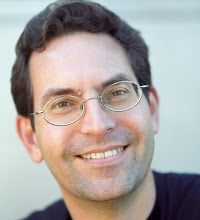
 This week I’ve taken vacation time to help my colleagues in Japan and New Zealand with national IT planning. As I often say, the healthcare IT challenges are the same all over the world, but the cultural context is different. In Japan, I spent 2 days in Tokyo and 1 day in Kyoto, lecturing, meeting, and listening to stakeholders. There is a great desire to share data for care coordination and clinical trials/clinical research. Telemedicine/telehealth is increasingly important in an aging Japanese society that has increasing healthcare needs but a limited number of caregivers and few opportunities to increase healthcare budgets. Here are a few of the current issues we discussed...
NCSU Hosts One-Day Introduction to Open Source
Christine Hall | Foss Force | February 1, 2017
It’s something of a grand experiment and it’s being being hosted this weekend on the campus of North Carolina State University in Raleigh. What it is might be called a miniconference, but let’s not call it that. “Mini” indicates smallness, and there’s nothing small about this event, even if it is only a single day affair. Let’s call it a full fledged conference. The students attending will like that. It’ll make them feel important and so grown-up — which they are, actually...
- Login to post comments
Public Health Tech: The Future of Health Tech You Never Heard Of
Marquesa Finch, MPH | The Doctor Weighs In | January 29, 2017
Digital Health has experienced a glorious boom in the last decade and is expected to reach $379.3 Billion by 2024 with 25% of the growth occurring between 2016 and 2024. Patient management can now be done on user-friendly platforms; physicians can remotely monitor their patients with mobile devices and telemedicine; and personal trackers and genetic testing are allowing patients easier access to their own health data. Clearly, we understand the kind of power technology has on improving the delivery of care and management of disease...
- Login to post comments
Halamka's Health IT Observations from Japan and New Zealand
By John D. Halamka, MD | February 8, 2017
- Login to post comments
Can the Healthcare System Change Its Spots?
By Kim Bellard | February 7, 2017
 Just a few years ago, things were looking up for the American health care system. We were going to start finding better ways to pay for care: call it pay-for-performance (P4P), value-based purchasing (VBP), or similar terms. We were going to nudge -- or, rather, push -- providers into more clinically integrated systems (e.g., ACOs) to help improve outcomes and to control costs. And, of course, with wider use of electronic health records (EHR), we'd be able to better coordinate care and make decisions based on actual data. It all sounded very promising. Now, though -- what's that old expression about the leopard not being able to change its spots?...
- Login to post comments
Why Should Hackers Have Easier Access to EHRs than Patients?
Mike Miliard | Healthcare IT News | January 3, 2017
In a Jan. 2 New York Times opinion piece, Eric Topol, MD, professor at the Scripps Research Institute, and Kathryn Haun, a federal prosecutor who teaches a course on cybercrime at Stanford Law, take aim at what they call "quite a paradox": the fact that most patients still can't readily access their own health data, even as there's "an epidemic of cybercriminals and thieves hacking and stealing this most personal information"...
- Login to post comments
A New Meaning for Connected Health at 2016 Symposium (Part 3)
Andy Oram | EMR & HIPPA | October 7, 2016
 The previous section of this article paused during a discussion of the accuracy and uses of devices. At a panel on patient generated data, a speaker said that one factor holding back the use of patient data was the lack of sophistication in EHRs. They must be enhanced to preserve the provenance of data: whether it came from a device or from a manual record by the patient, and whether the device was consumer-grade or a well-tested medical device. Doctors invest different levels of trust in different methods of collecting data: devices can provide more objective information than other ways of asking patients for data. A participant in the panel also pointed out that devices are more reliable in the lab than under real-world conditions. Consumers must be educated about the proper use of devices, such as whether to sit down and how to hold their arms when taking their blood pressure...
- Login to post comments
A New Meaning for Connected Health at 2016 Symposium (Part 4)
Andy Oram | EMR & HIPPA | October 8, 2016
He has found that successful companies pursue gradual, incremental steps toward automated programs. It is important to start with a manual process that works (such as phoning or texting patients from the provider), then move to semi-automation and finally, if feasible, full automation. The product must also be field-tested; one cannot depend on a pilot. This advice matches what Glen Tullman, CEO of Livongo Health, said in his keynote: instead of doing a pilot, try something out in the field and change quickly if it doesn’t work...
- Login to post comments
Vocera Aims For More Intelligent Hospital Interventions
Andy Oram | EMR & HIPPA | October 14, 2016
Vocera Communications’ and Extension Healthcare’s solutions blend to take pressures off clinicians in hospitals and improve their responses to patient needs. According to Brent Lang, President and CEO of Vocera Communications, the two companies partnered together on 40 customers before the acquisition. They take data from multiple sources–such as patient monitors and electronic health records–to make intelligent decisions about “when to send alarms, whom to send them to, and what information to include” so the responding nurse or doctor has the information needed to make a quick and effective intervention.
- Login to post comments
HealthTap Announces a Comprehensive Health App Platform
Andy Oram | EMR & HIPPA | October 10, 2016
For the past five years, HealthTap has been building a network of doctors and patients who exchange information and advice through information forums, messaging, video teleconferencing, and other integrated services. According to CEO Ron Gutman, all that platform building has taught them a lot about what health app developers need–knowledge that they’ve expanded by listening to hospitals and third-party app developers over the years. On Tuesday, November 1, HealthTap announced a comprehensive cloud platform pulling together all these ideas. The features in the press release read like a wish list from health app developers...
- Login to post comments
Postmodern EHR: Solving the feral systems dilemma
By Tomaž Gornik | February 2, 2017
 Feral systems are software solutions developed by individuals or groups to help with day-to-day activities. They are called feral (or “wild”) because they are used in addition to core IT systems, working around key system architecture – more often than not without the blessing of management. I was first made aware of this expression a couple of years ago by Ewan Davis, who wrote a blog post about it stating: “The hundreds of “Feral Systems” in an average large hospital represent a goldmine of knowledge and innovation that could be harnessed in the design of digital systems that really work, but as they are today they also create a massive technical debt and create safety, governance and reputational risks for the organisation in which they are used.”
- Login to post comments
Copyright ©2011-2020 Open Health Marketplace, LLC. All Rights Reserved.