
Open Source Libraries for Health Analytics
 According to Health Catalyst’s Director of Data Science Levi Thatcher, the main author of the project, these tools are tried and tested. Many of them are based on popular free software libraries in the general machine learning space: he mentions in particular the Python Scikit-learn library and the R language’s caret and and data.table libraries. The contribution of Health Catalyst is to build on these general tools to produce libraries tailored for the needs of health care facilities, with their unique populations, workflows, and billing needs. The company has used the libraries to deploy models related to operational, financial, and clinical questions. Eventually, Thatcher says, most of Health Catalyst’s applications will use predictive analytics based on healthcare.ai, and now other programmers can too...
- Login to post comments
Health Tap: Intelligent Interface for Patients
allows patients to connect with doctors online, and additionally hosts an enormous repository of doctors’ answers to health questions. In addition to its sheer size and its unique combination of services, HealthTap is ahead of most other health care institutions in its use of data. I talked with founder and CEO Ron Gutman about a new service, Dr. AI, that triages the patient and guides her toward a treatment plan: online resources for small problems, doctors for major problems, and even a recommendation to head off to the emergency room when that is warranted. The service builds on the patient/doctor interactions HealthTap has offered over its six years of operation, but is fully automated...
- Login to post comments
Is The 1.5+ Trillion Dollar HITECH Act a Failure?
 Hopefully, the public statements made by President Obama and Vice President Biden will lead to a public debate over the monumental problems that the HITECH Act and proprietary EHR vendors have caused the American people. While the press continues to report the figure of $35 billion as the cost of implementing EHRs, that figure does not tell the entire story. Perhaps the next step is to provide accountability and transparency. That would start with firm numbers regarding the real costs of EHR implementations forced on an unprepared healthcare system by the HITECH Act.
- The Future Is Open
- Login to post comments
Distributed Ledgers, the Next Step in Patient Generated Health Data (PGHD) - Part 2
 An associate of mine provided good feedback on my previous post on Pulse, he disagreed with me in earnest and stated that Blockchain/ Distributed Ledger (DL) wasn't a good platform for storing PGHD (Patient Generated Health Data). I appreciated his comments, I decided to provide a bit more context and information. For those of you that are not familiar with Distributive Ledgers, they are the technology that support Blockchain, which is the foundation of Bitcoin. Basically, Distributive ledgers are an add-hoc standard database with security, transparency and access control more or less built in...
- Login to post comments
Open Source is Helping to Drive the Artificial Intelligence Renaissance
 We're only a few days into 2017, and it's already clear that one of the biggest tech categories of this year will be artificial intelligence. The good news is that open source AI tools are proliferating and making it easy for organizations to leverage them. AI is also driving acquisitions. As Computerworld is reporting, in the past year, at least 20 artificial intelligence companies have been acquired, according to CB Insights, a market analysis firm. MIT Technology Review is out with its five big predictions for AI this year. Here is a bit on what they expect, and some of the open source AI tools that you should know about...
- Login to post comments
Obama’s Surprising Answer on Which Part of Obamacare Has Disappointed Him the Most
 There was this moment, about 50 minutes into our interview with President Barack Obama last week, that genuinely surprised me (and surprised other health care journalists, like David Nather, too). My colleague Ezra Klein had asked the president a question about which part of the law had overperformed his expectations, and which part of the law had underperformed. The president gave a surprisingly frank assessment of something his administration has tried, and failed, to do: Get doctors off paper and on to digital medical records...
- Login to post comments
Medicaid’s Data Gets an Internet-Era Makeover
 Jini Kim’s relationship with Medicaid is business and personal. Her San Francisco start-up, Nuna, while working with the federal government, has built a cloud-computing database of the nation’s 74 million Medicaid patients and their treatment. Medicaid, which provides health care to low-income people, is administered state by state. Extracting, cleaning and curating the information from so many disparate and dated computer systems was an extraordinary achievement, health and technology specialists say. This new collection of data could inform the coming debate on Medicaid spending...
- Login to post comments
Veterans Health Administration Thinks Key to Interoperability May Be in the Cloud
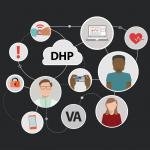 The giant Veterans Health Administration is poking its head into the cloud to see if therein lies the key to sharing data within and outside of its sprawling healthcare delivery system. The goal of the Digital Health Platform is to pull patient data from the VA, military and commercial electronic health record systems, applications, devices and wearables and send it to a patient's healthcare team in real-time. That would allow patients to more easily obtain health care from physicians and hospitals outside of VA facilities, but some experts say a cloud-based platform also leaves it vulnerable to hackers...
- Login to post comments
HealthTap Brings Artificial Intelligence to Self-Triage
 HealthTap, which calls itself the “world’s first global health practice,” is moving deeper into virtual care by introducing an artificial-intelligence engine to triage cases automatically. Tuesday, Palo Alto, California-based HealthTap is launching Doctor A.I. It’s an AI-powered system that has been trained by clinical knowledge collected from the 104,000 physicians and millions of patients on the HealthTap network. Doctor A.I. is, as the six-year-old company said, “trained in the art of digital empathy”...
- Login to post comments
Many Healthcare Technologies Are Married to the Fee-for-Service Model
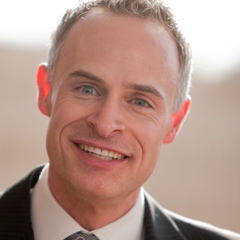 Monday’s 5 p.m. digital health panel at the J.P. Morgan Healthcare Conference happened to coincide with a presentation given by the popular U.S. Vice President Joe Biden. Some attendees were torn. For those that did make it, panel moderator Bob Kocher promised some topical debates far more interesting than that “moon-thing” Biden has been up to. It was all of the fun, without the metal detectors. A partner at Venrock Ventures, Bob Kocher set the stage with some fundamental observations about how technology can help enhance healthcare for all stakeholders...
- Login to post comments