
OSEHRA's Open API and Open Architecture (OA2) Workgroup Purpose, Goals and Scope
Operational Healthcare IT systems in clinical facilities large and small commonly leverage a mix of Open Source, Commercial and custom built components. As the industry moves from closed monolithic EHRs toward a new era of Open APIs to integrate new applications with legacy systems the effort and risk of integrating those components together will be greatly reduced, but to be fully effective system designers and integrators must have more than a set of independent APIs.
- Login to post comments
Feature Overlaps Between Immunization Information Systems and EHRs
 Immunization Information Systems (IIS) have been around for nearly twenty years. Their functionality, completeness, and usefulness have all increased over this time. IIS and electronic health record (EHR) systems have always had unique features, as well as some overlapping features, and the deployment of EHRs has enhanced the local immunization capabilities of clinician practices. Several critical clinical features that are considered to be core functions of IIS are beginning to be supported by EHRs. This article will review and discuss five such critical features: online data entry, clinical decision support for immunization, reminder-recall, practice-level assessment of up-to-date status, and patient access to their immunization data.
- Login to post comments
Edge computing and the importance of open infrastructure
 The "edge" is diverse, dispersed, often independently owned and operated, and comes with a set of constraints not addressed in the average data center. Old sci-fi films painted a picture of how computers would permeate every facet of life in the future. It has come to pass, and it happened almost without us noticing: having PCs at home became commonplace, our mobile phones turned into small smart devices, and our cars began making decisions for us, controlled by thousands of sensors and controllers. Self-driving cars, augmented and virtual reality, smart homes and more all underscore our rapidly emerging dependence on distributed computing infrastructure.
- Login to post comments
A Bureaucratic Mess Leads to Shutdown of HHS Cybersecurity Center
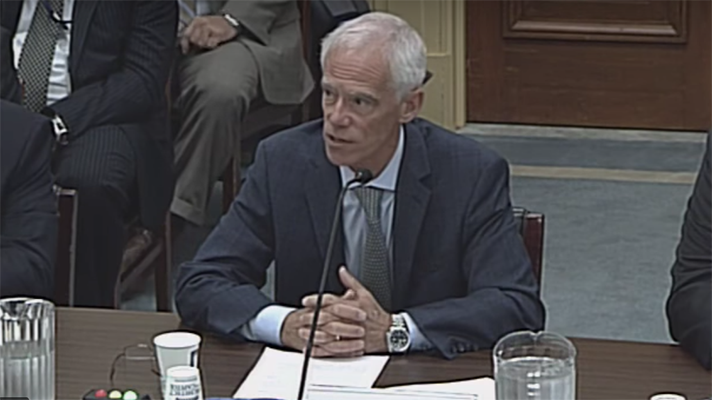 In May 2017, the Department of Health and Human Services decided to stand up its own version of the Department of Homeland Security’s National Cybersecurity and Communications Integration Center in order to address the increasing cybersecurity risks to the health care sector. But creating the Health Cybersecurity and Communications Integration Center, or HCCIC, was the easy part. Soon after, the newfound center landed in the spotlight, sparking agency and industry drama about the role and scope of HHS authorities in information sharing.
- Login to post comments
12 Students Picked to Work on OpenMRS Projects as Part of the Google Summer of Code 2018 Program

Congratulations and a warm welcome to the 12 students selected for Google Summer of Code 2018, and extended thanks to our fantastic group of OpenMRS project mentor volunteers, as well as all students that submitted applications this year! A total of 1,264 students from 64 different countries have been accepted to work with more than 200 open source projects for GSoC 2018. Since 2007, OpenMRS has enjoyed participating in this great program, and we’re thrilled to be involved again this year, marking our 12th year of participation. We’re looking forward to working with a diverse set of students and mentors across a range of exciting and impactful projects.
- Login to post comments
FDA Issues RFQ for Large Scale EHR Study - Wants to Leverage VA's Open Source VistA EHR and Database for Research
 The Food and Drug Administration (FDA) yesterday issued a Request for Quotation (RFQ) for a large-scale electronic health record (EHR) system. This RFQ is very important as the objective is to develop a platform to support a critical project by the FDA's Division of Bioinformatics and Biostatistics (DBB) "to conduct research to assess the safety and surveillance of FDA regulated products through the FDA adverse event reporting systems..." Adverse drug reactions are one of the leading causes of death in the US, thus finding which drugs cause negative interactions is of vital importance. The project requires "use of the large electronic medical record (EMR) system..." The project is going to leverage the largest, most comprehensive, and clinically relevant medical records database, that of the US Department of Veterans Affairs (VA).
- The Future Is Open
- Login to post comments
On the Need to Improve User-Centered Design (i.e. Design Thinking) for Healthcare IT Usability
 The lack of usability of electronic health records (EHRs) and healthcare IT applications, in general, has been in the news a lot again. This time it is a research report published in the Journal of the American Medical Association (JAMA) on March 27. The study analyzed voluntary error reports associated with EHR systems and found that problems with EHR usability may have directly resulted in patient harm. Unfortunately, this situation is all too common in the healthcare industry. Numerous health care systems are designed and created ad hoc, or with a very engineering-centric approach. End users are dissatisfied and often systems or workflows are abandoned and/or dangerous work-a-rounds created. A lot of people are saying Healthcare IT needs a disruption. What HealthIT needs is to begin to learn about and understand the needs, goals, and methods of the actual end-users, like doctors, nurses, medical assistants, etc.
- Login to post comments
Mainstream Academia Embraces Open Source Hardware
 Twenty years ago, even staunch proponents of free and open source software like Richard Stallman questioned the social imperative for free hardware designs. Academics had barely started to consider the concept; the number of papers coming out annually on the topic were less than could be counted on someone's fingers. Not anymore! Not only has the ethical authority of Stallman embraced free hardware and free hardware design, but so has the academic community. Consider the graph below, which shows the number of articles on open source hardware indexed by Google Scholar each year from 2000 to 2017. In the last 17 years, the concept of open source hardware has erupted in ivory towers throughout the world. Now more than 1,000 articles are written on the topic every year.
- Login to post comments
US Core Data for Interoperability Task Force Delivers its Recommendations
On April 18, 2018 the HHS Health Information Technology Advisory Committee (HITAC) US Core Data for Interoperability Task Force delivered its recommendations on the draft US Core Data for Interoperability (USCDI) and Proposed Expansion Process which had been published for public comment back in January 2018. HITAC promptly accepted the Task Force’s recommendations. The Task Force focused almost exclusively on the process for identifying the USCDI rather than the proposed USCDI data itself. I especially appreciated their introduction of some key concepts related to how USCDI should be organized and understood.
- Login to post comments
OSEHRA Innovation Webinar on the VA's Pharmacy Product System
Pharmacy Product System – National 3.0 (PPS-N), released in December 2017, involves major changes to how National drug file updates in VistA systems are distributed and applied. This webinar will give an overview of those changes and will provide transition advice to the broader community. Any users or companies that rely on VistA for a listing of the current drugs will benefit from attending this session.
- Login to post comments