
It's Time To Pay The Maintainers
 Earlier this year, Tidelift conducted a survey of over 1,200 professional software developers and open source maintainers. We found that 83% of professional software development teams would be willing to pay for better maintenance, security, and licensing assurances around the open source projects they use. Meanwhile, the same survey found that the majority of open source maintainers receive no external funding for their work, and thus struggle to find the time to maintain their open source projects. So, to put what we learned succinctly...It's time to pay the maintainers. Not just because they deserve to be compensated for their amazing work creating the software infrastructure our society relies on (they do!). But also because there is a ready-made market of professional developers willing to pay for assurances they are in the best position to provide. Here's an idea for how to do it...
- Login to post comments
Instead of Medicare for All, How about VA for All?
 I wonder -- why would people be calling for a new system that would still have thousands of private hospitals/facilities and millions of healthcare professionals, practicing FFS medicine using countless systems and data structures? In short, why aren't people calling for VA for All? Like Medicare, the VA -- more especially, its healthcare component, the Veterans Health Administration -- is charged with providing healthcare to a designed population, in this case, veterans. Unlike Medicare, though, it does so as an integrated health system (by far the largest in the U.S.), with 170 VA Medical Centers, over a thousand outpatient facilities, and somewhere over 100,000 physicians...it offers some of the finest care in the world. It offers a range of services that Medicare can only dream of, and it does so at, it is believed, lower costs than private coverage or even Medicare. Plus, it also was an innovator in electronic health records and is today in telehealth. What's not to like?
- Login to post comments
Too Great a Thing to Leave Undone: Defense of Agriculture
On November 5, 2019, the Bipartisan Commission on Biodefense will convene a meeting, Too Great a Thing to Leave Undone: Defense of Agriculture, to inform its continuing assessment of the biological threat, specific vulnerabilities, and overwhelming consequences to agricultural producers. In its October 2017 report, Defense of Animal Agriculture, the Commission explored the need to address vulnerabilities to animal health. Now the Commission intends to revisit and add to its previous recommendations, expanding its review to include other aspects of agricultural security, including the role played by land grant universities and public-private partnerships in safeguarding the nation. Read More »
- Login to post comments
The World Knows an Apocalyptic Pandemic Is Coming
 A new independent report compiled at the request of the United Nations secretary-general warns that there is a "very real threat" of a pandemic sweeping the planet, killing up to 80 million people. A deadly pathogen, spread airborne around the world, the report says, could wipe out almost 5 percent of the global economy. And we're not ready. The ominous analysis was compiled by an independent panel, the Global Preparedness Monitoring Board (GPMB), which was assembled last year in response to a request from the office of the U.N. secretary-general, and convened jointly by the World Bank and World Health Organization (WHO). Co-chaired by the former WHO head and former Norwegian Prime Minister Gro Harlem Brundtland and the head of the international Red Cross, Elhadj As Sy, the GPMB commissioned expert studies and issued a scathing attack on the political, financial, and logistical state of pandemic preparedness affairs.
- Login to post comments
ONC Patient Matching Project Moving Forward...Slowly
 Last week, the Office of the National Coordinator for Health Information Technology (ONC) released the final report from its Patient Matching, Aggregation, and Linking (PMAL) Project, as well as an additional report describing a pilot project to test the Patient Demographic Data Quality Framework (PDDQ) to Support Patient Matching that was released several years ago. Funded from June 2015 through September 2018 by the HHS Office of the Assistant Secretary for Planning and Evaluation (ASPE) through the Patient-Centered Outcomes Research (PCOR) Trust Fund, PMAL was one of the activities I described in an earlier post. The Final Report reviews the four challenged of patient matching and linking that the PMAL project attempted to address...
- Login to post comments
Confronting Catastrophic Disasters With 21St Century Technologies
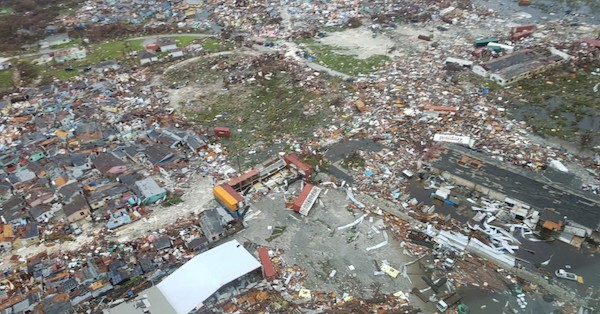 The unfolding tragedy in the Bahamas demonstrates that the 21st century will be marked by increasingly frequent, often catastrophic disasters of unprecedented scope and scale. Yet again, the unprecedented challenges of disaster management are being met with mostly conventional, labor-intensive, costly, and often inadequately slow response efforts. These 21st-century threats, particularly those that affect livelihood, health, and well-being, deserve the application of 21st-century technologies. Read More »
- Login to post comments
HCA Healthcare Can't Hide From Hurricanes With 45 Hospitals In Florida, So It Preps Like It's The Apocalypse
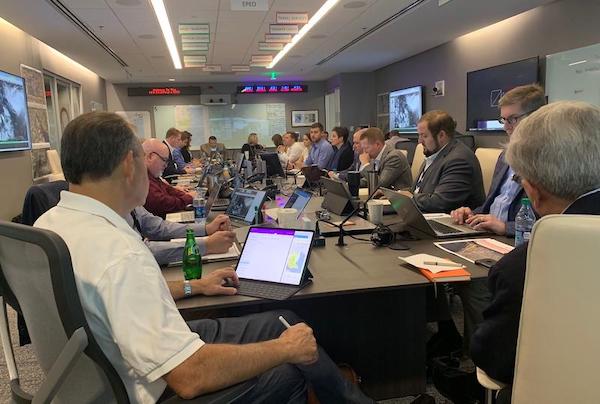 As Hurricane Dorian threatened the Florida coast, top officials at HCA spent Labor Day weekend wringing their hands, pulling all-nighters in a Nashville command center. It almost didn't matter where the storm hits; HCA Healthcare's hospitals were going to be affected. With dozens of hospitals on Florida's east and west coasts, the for-profit hospital chain is exposed every time a hurricane threatens the Sunshine State. Late last week, the nation's largest hospital company granted WPLN rare access to observe storm preparations as Dorian bore down on the Florida coast. The mood was serious. Chatter was limited. The only sound competing with speakers was the hum of fingers on laptops taking furious notes.
- Login to post comments
How to Open Source Your Academic Work in 7 Steps
 Open source technology and academia are the perfect match. Find out how to meet tenure requirements while benefiting the whole community. Academic work fits nicely into the open source ethos: The higher the value of what you give away, the greater your academic prestige and earnings. Professors accomplish this by sharing their best ideas for free in journal articles in peer-reviewed literature. This is our currency, without a strong publishing record not only would our ability to progress in our careers degrade, but even our jobs could be lost (and the ability to get any other job). The following seven steps provide the best practices for making an academic's work open source...
- Login to post comments
Commentary: Ebola is Raging Again - And The U.S. Is Not Ready
 Today, the threat from Ebola is more serious. The World Health Organization has declared it to be a global public health emergency because Ebola has again defied controls and spread to the city of Goma in the Democratic Republic of Congo, where it could in turn spread throughout more densely populated urban areas and gain access to the global transportation system. We support this declaration and the additional resources and attention it should bring to the situation, but the WHO should have made it earlier. Ebola was an emergency long before it spread to Goma.
- Login to post comments
Cyberbio Convergence: Characterizing the Multiplicative Threat
The cyber and biological scientific arenas are converging rapidly. While the government recognizes that the nation is vulnerable to cyber attacks and continues to invest enormous resources into their prevention, response, and recovery, it invests far less in countering biological attacks. These two areas of science and technology are beginning to converge now, making the nation increasingly unsafe and insecure. On September 17, 2019, we will convene a meeting of the Study Panel, Cyberbio Convergence: Characterizing the Multiplicative Threat to inform our continuing assessment of the biological threat, specific vulnerabilities, and overwhelming consequences.
- Login to post comments