
Experts Warn Of Antimicrobial Resistance, Additional Threats To National Biosecurity
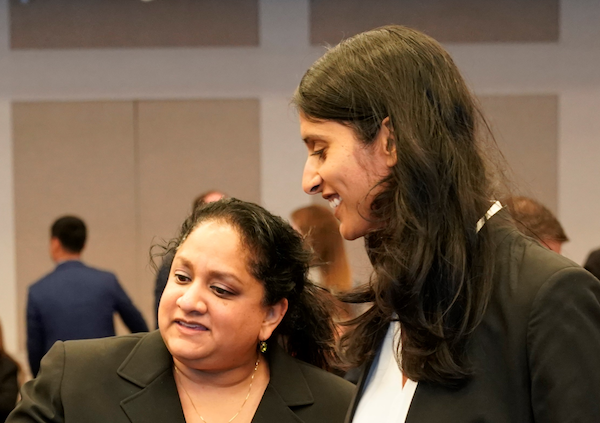 Dr. Asha George...was among a panel of experts testifying about the state of U.S. preparedness for biological attacks and infectious disease pandemics. The experts agreed that a range of factors affect our country's ability to fight these threats, including weakened or fragmented federal oversight, limited incentives for research and development, and a lack of preparedness at the local level to protect vulnerable populations. "In short, the nation is not prepared for biological outbreaks, acts of bioterrorism, biological warfare of accidental releases with catastrophic consequences," George said. "We are talking about catastrophic events that affect the function of our entire society."
- Login to post comments
Biodefense Takes Center Stage at House Oversight Hearing
 Is the nation ready to defend against antibiotic-resistant diseases or bioterrorism? What would the response to a biological attack or disease pandemic look like? Those threats and the collaboration of private, federal and local agencies to respond to them were the focus of a hearing Wednesday in the House Oversight Subcommittee on National Security on biodefense preparedness. Congressman Stephen Lynch, D-Mass., said at the beginning of the hearing that around 2.4 million people could die in high-income countries between 2015 and 2050 without an effort to contain antimicrobial resistance, according to an April report to the Secretary-General of the United Nations.
- Login to post comments
Experts support a future Manhattan Project for Biodefense to thwart new threats
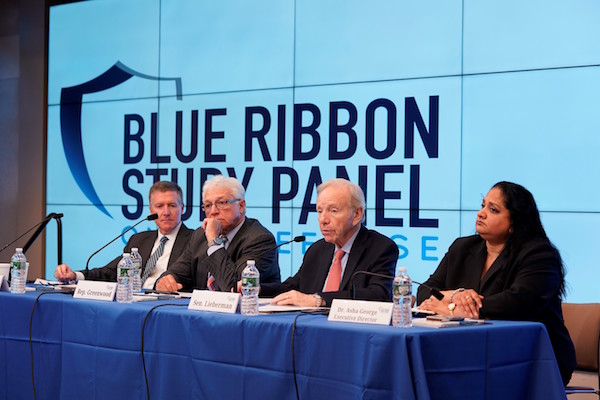 An effort similar to the Manhattan Project - in which American-led R&D produced the first nuclear weapons during World War II - is needed now in defense against the growing global threats posed by infectious diseases and bioterrorism, sources said Thursday during a Blue Ribbon Study Panel on Biodefense meeting...witness panelists and attendees at the panel's first public meeting held yesterday in New York City discussed "A Manhattan Project for Biodefense: Taking Biological Threats Off the Table," a proposed national, public-private research and development undertaking that would defend the United States against biological threats.
- Login to post comments
Is the US Healthcare System Suffering from the Dunning-Kruger Effect?
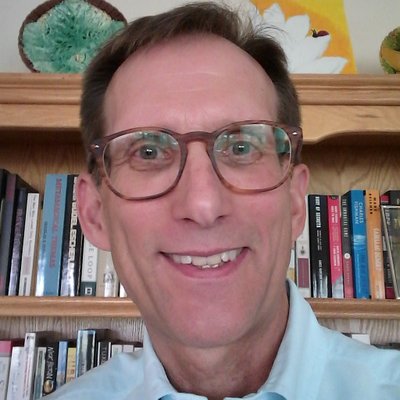 Psychologist David Dunning, originator of the eponymous Dunning-Kruger effect, recently gave an interview to Vox's Brian Resnick. For those of you not familiar with the Dunning-Kruger effect, it refers to the cognitive bias that leads people to overestimate their knowledge or expertise. More importantly, those with low knowledge/ability are most likely to overestimate it. Does this make anyone else think of the U.S. healthcare system? Professor Dunning proposed the effect in 1999, in a paper in Journal of Personality and Social Psychology, along with then-graduate student Justin Kruger. Since then, it has become widely known and broadly applied (not always accurately, as Dr. Dunning explains in the interview).
- Login to post comments
Open Education: There Isn't an App for That
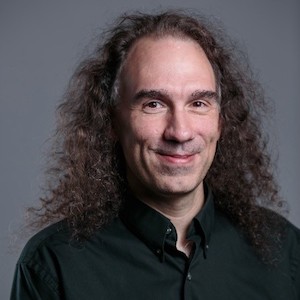 Open source software has saved my district-Penn Manor School District in Lancaster County, Pennsylvania-more than a million dollars on its technology budget. But more importantly, making a deliberate and concerted effort to infuse open principles and practices into our learning environments has cultivated a vibrant and inclusive learning community that cuts across the school. And as a result, student success has exceeded our expectations. But how do schools put open ideas into practice to foster future innovators and leaders? It's not as simple as installing Linux on 4,000 student laptops, holding hands, and singing the alma mater in the high school cafeteria.
- Login to post comments
OSEHRA 2019 Summit in Washington to Examine Next Steps for Open Health
 The Open Source Electronic Health Record Alliance (OSEHRA) will be holding its 8th Annual Open Source Summit at the Bethesda North Marriott Hotel and Conference Center. The theme of this year's two-day Summit is "Open SaaS - Open Source in the Cloud," this year's two-day Summit will showcase leading-edge, open source initiatives and highlight the increasing level of public-private partnership in major programs and agencies. Open source software has become key to both implementation and interoperability as more and more programs opt for cloud-based solutions and software-as-a-service delivery models. This Summit will address ways to optimize open source utilization and community involvement in this new playing field.
- The Future Is Open
- Login to post comments
California’s Other Drought: A Major Earthquake Is Overdue
 California earthquakes are a geologic inevitability. The state straddles the North American and Pacific tectonic plates and is crisscrossed by the San Andreas and other active fault systems. Tragic quakes that occurred in 2017 near the Iran-Iraq border and in central Mexico, with magnitudes of 7.3 and 7.1, respectively, are well within the range of earthquake sizes that have a high likelihood of occurring in highly populated parts of California during the next few decades. The earthquake situation in California is actually more dire than people who aren't seismologists like myself may realize. Although many Californians can recount experiencing an earthquake, most have never personally experienced a strong one. For major events, with magnitudes of 7 or greater, California is actually in an earthquake drought. Multiple segments of the expansive San Andreas Fault system are now sufficiently stressed to produce large and damaging events.
- Login to post comments
OSEHRA 2019 Summit Preview
Yes, this is a shameless promo for the upcoming 2019 OSEHRA Open Source Summit, Open SaaS – Open Source in the Cloud! Join the OSEHRA staff and several of our key presenters for a fast-paced 30-minute look at the highlights of our 2019 agenda. If you’re already registered, this quick review will help you plan your attendance and track choices. If you’re on the fence, tune in to see why you should meet the community at the Bethesda North Marriott and Conference Center on July 9-10.
- Login to post comments
U.S. Healthcare Is a Cadillac...Unfortunately
The good news: the U.S. healthcare is a Cadillac. The bad news: it's not an Escalade or even an XTS, it's a Cimarron, which is on most experts' list not only of the worst Cadillacs ever but also the worst cars ever -- expensive and poor quality. It was literally a Chevy Cavalier dressed up and trying to pretend to be a luxury car. You probably get the metaphor. There was a time when "Cadillac" was essentially a synonym for quality. Products aspired to be "the Cadillac of ____." It was a compliment of the highest order, understood worldwide. Foreign auto manufacturers tried to match its quality and make a dent into its market share. There was a time with U.S. healthcare had that kind of status too.
- Login to post comments
Why Cloud for Health IT? Sharing our Experience at careMESH
If you want true, robust security, it is increasingly difficult to argue against cloud, given the advancements and growth in major service providers such as Google, Amazon, or Microsoft. No matter how many security staff members or how much cybersecurity experience you have, the major service providers have more. It's no surprise that across industries, investment in cloud computing, storage and infrastructure are predicted to grow at a rate of 17% annually over the next 3 years.[i]
- Login to post comments