
 It has become an article of faith in some health policy circles over the past 20 years that the "solution" for our health care system's woes is to make us better health care consumers -- the so-called consumer-driven movement. After all, we've known for at least forty years that increased cost-sharing does influence how much health care we consume, so, in theory, higher deductibles and coinsurance, plus better cost/quality information, should give us the right incentives to shop. Most health care professionals are equally convinced patients aren't, and are never going to be, "consumers" in any meaningful sense. Health care is too scary, relies on too much specialized information, and is too often "consumed" at times when we are least able to make thoughtful decisions...
Survey: Healthcare Execs See Poor ROI from EHRs but Optimistic about Analytics
 The billions in taxpayer dollars spent on electronic health records (EHRs) since 2009 have unfortunately generated a poor return for the nation’s healthcare system, according to a survey of more than 1,100 healthcare professionals conducted by Salt Lake City-based data analytics vendor Health Catalyst. Health Catalyst polled healthcare professionals attending the fourth annual Healthcare Analytics Summit September 12-14 in Salt Lake City...
- Login to post comments
MissingMaps: Chart a Course to Disaster Relief From Your Phone
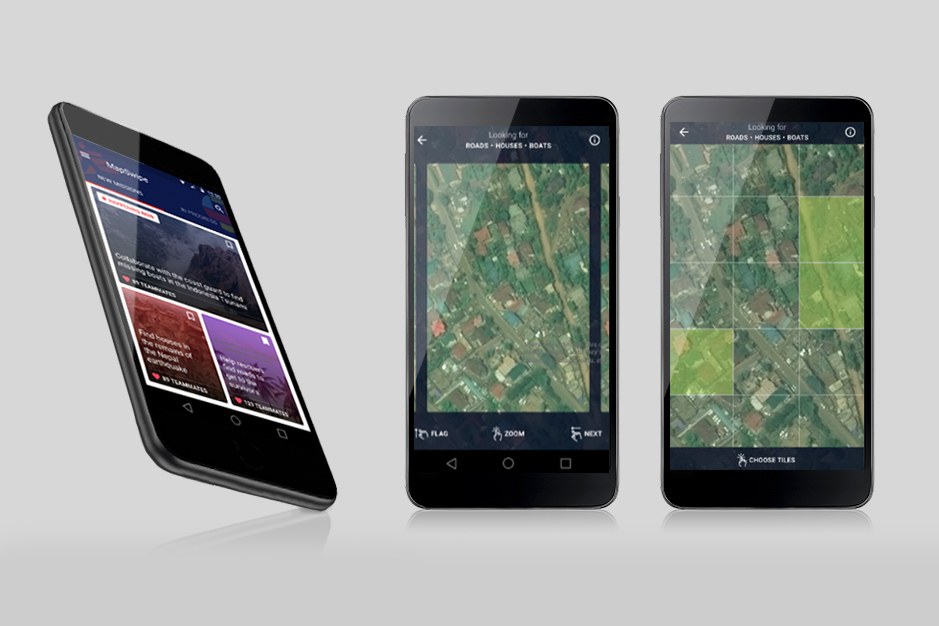 Delivering life-saving aid to the middle of a war-zone or disaster area is no easy task. First, there’s the challenge of actually getting there. While navigation software now offers detailed maps of most cities, the uncharted villages and remote conflict zones served by Doctors Without Borders/Medécins Sans Frontières (MSF) are another beast entirely. Even though a remote village or unmarked street might be visible in satellite imagery, it can take MSF mappers months to locate, sketch, and code the kind of detailed digital maps aid workers rely on...
- Login to post comments
Presenting the Open Aid Movement at Open Source Bridge
 “Open source” is a method for putting intellectual property in the public domain, allowing anyone to use it however they see fit. I’m an advocate of the “open source way” because I believe that if more people shared intellectual property of all types – whether its farming techniques, software code, music, etc – then we’ll eventually be able to meet the basic needs of everyone in the world, allowing all people to pursue their own happiness without fear of material scarcity...
- Login to post comments
Mismatched Symptoms Call EHR Data Integrity into Question
A new study published in JAMA this month indicates that EHR data may not be completely aligned with what patients report to their providers. Eye health researchers from Michigan Medical School investigating EHR data integrity found that just 23.5 percent of EHRs contain exactly the same information as volunteered by patients, raising questions over the accuracy of clinical documentation...
- Login to post comments
Digital health round-up: bioelectronics are closer than you think
 Towards the end of last year, Google’s life sciences division Verily and GlaxoSmithKline co-founded Galvani Bioelectronics to develop medicines that harness electrical signals in the body to treat chronic diseases like asthma, arthritis and even gastrointestinal diseases. At the time, the unveiling of Galvani felt like a new frontier in medicine and, though somewhat difficult to comprehend, something that could genuinely change the lives of millions of people worldwide...
- Login to post comments
Patients Are Not Consumers...But Who Is?
- Login to post comments
Public Health Threats Emerging in Houston in the Aftermath of Hurricane Harvey
 Although Hurricane Harvey's floodwaters have largely receded, public health threats are emerging over polluted floodwater and contaminated drinking water. Chemical pollution from damaged industrial sites, flooded toxic waste site, and contamination by infection-causing bacteria have been the main causes of concern. The U.S. Environmental Protection Agency (EPA) warned residents and cleanup workers who might be exposed to floodwaters to take precautions due to hazards such as dangerous debris, bacteria, and other contaminants. This article will review some of those public health threats.
- Login to post comments
VA PALS Project Overview
The VA-PALS project is bringing life-saving early-lung-cancer screening and treatment to VA, through evidence-based medical protocols and new open-source Vista software to support them. This webinar will introduce this project including the clinical motivation and goals for the project, the technical approach to integrating early lung cancer screening management software into VistA, and a vision for future support of screening in VistA.
- Login to post comments
Hurricanes Harvey and Irma Draw the Line - Time for the US to Embrace Open Source Emergency and Disaster Response
 For nearly 20 years now the global open source community and applications have been a keystone to disaster relief efforts around the world. The enormous number of disaster relief applications and knowledge that has been developed through all these years, should, and needs to be leveraged in the current crisis. For that reason, Open Health News is starting a series of articles to highlight some of the most important solutions. A substantial portion the open source applications for emergency and disaster response that exist are actually already on the news website in the form of articles and resource pages.
- The Future Is Open
- Login to post comments
Halamka Says We Can and Must Improve Healthcare Management
 As a physician and CIO, I’m quick to spot inefficiencies in healthcare workflow. More importantly, as the care navigator for my family, I have extensive firsthand experience with patient facing processes. My wife’s cancer treatment, my father’s end of life care, and my own recent primary hypertension diagnosis taught me how we can do better. Last week, when my wife received a rejection in coverage letter from Harvard Pilgrim/Caremark, it highlighted the imperative we have to improve care management workflow in the US. Since completing her estrogen positive, progesterone positive, HER2 negative breast cancer treatment in 2012 (chemotherapy, surgery, radiation), she’s been maintained on depot lupron and tamoxifen to suppress estrogen...
- Login to post comments