
 Meaningful Use Stage 2 has a requirement that I’ve always considered to be the “cart before the horse” - patients must be able to View/Download/Transmit their data. Viewing is great - we’ve done that at BIDMC since 1999 for all patients and all data. Download makes little sense since at the moment there is nothing a patient can do with a download. Of the 2 million patients at BIDMC, not one has ever requested a download. Transmit makes even less sense since there is no place to transmit the data to...
Feature Articles
The Current State of Open Data in the US Government
By Jason Hare | July 11, 2016
 In this article I will discuss the importance of open data in government, the current state of open data in government, and what we need to do to implement true open data. When I read an article on the Center for Data Innovation site, Congress Is Stepping Up to Protect Open Data, I was struck by two feelings: elation and surprise... The article links to a 2013 McKinsey report, Open data: Unlocking innovation and performance with liquid information, that says the national open data initiative of "open by default" represents real economic and transparency value for the public. The report points out that there is no assurance that open data will survive the end of the current administration...
Solving User Experience Problems with PatternFly
By Leslie Hinson | June 23, 2016
 Michael Dyrynda is a web developer at Hostworks, a freelance developer, and a blogger. He's working on his first open source project in Confomo with Matt Stauffer and podcasting the journey on briefs.fm. He also writes about web development and solving day-to-day problems with no readily available solutions. Michael's web development skills extend to front-end aspects of web development, including JavaScript, LESS/Sass/CSS, designing databases, as well as building applications that can scale. I connected with Michael on Twitter in late April after he tweeted that moving to PatternFly for an in-dev app was an "instant improvement"...
Why Apple HealthKit in iOS 10 Makes View/Download/Transmit Real
By John D. Halamka, MD | June 22, 2016
Building a Business on a Solid Open Source Model
By Jos Poortvliet | June 22, 2016
 Since we announced Nextcloud, an ownCloud fork, many people have asked me how we plan to build a sustainable, healthy open source business. My short answer is that it requires a strong focus on maintaining a careful balance between the needs of all stakeholders: users, contributors, employees, customers, and—of course—investors. Building a solid open source business requires that management has confidence in the abilities of your company, stakeholders must be on board with the business model, and everyone must understand that balance is important for the ecosystem. Like a rising tide lifts all boats, a strong ecosystem benefits all stakeholders...
Open Source Software Has to Sell User Experience
By Adam Hyde | June 28, 2016
 Mattermost does open source the right way. Open source software that is to succeed in this new world is going to have to be better than anything else. You can't sell just openness anymore; it is added value, not a unique selling point. Open source software now has to sell user experience. In a way it is a simpler metric, and probably one that is going to change open source forever—for the better. An exemplar of this new way is Mattermost, the open source messaging platform. Sure, they weren't first to the game, because Slack blazed the trail...
Using the Latest Advances in Data Science to Fight Infectious Diseases
By Payam Etminani | June 16, 2016
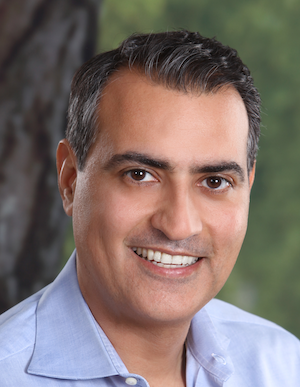 One of the most dramatic shifts in recent years that is empowering epidemiologists to be more effective at their jobs is occurring due to improvements in data technologies. In the past, the old "relational" data model dictated that data had to be highly structured, and as a result treated in distinct silos. This made it difficult, if not impossible, to analyze data from multiple sources to find correlations. Epidemiologists would spend many minutes or even hours on each query they ran to get results back, which is unacceptable when you need to test dozens of hypotheses to try to understand and contain a fast-moving outbreak. (Imagine how you would feel if each one of your Google searches took 45 minutes to return!) By contrast, using newer technologies, the same queries on the same hardware can run in seconds. Read More »
How Can Hospitals Possibly Prepare for Disasters? With Practice and Planning
By Sam Shartar | July 1, 2016
 The tragic shooting in Orlando brought dozens of victims to emergency rooms. Now, several of those people have been admitted and are clinging to life. Many across the nation are praying for them and other victims. Without quick response and high-quality emergency medical care, many more than the 49 already reported may have died. Emergency room physicians described a scene of horror as wounded patients flooded the nearest hospitals and gurneys lined up in hallways. How do emergency departments deal with such an unpredictable and horrific occurrence?
OSEHRA 2016 Summit to Address Range of Open Health Projects from Global Health IT to the Next Steps for VistA
By Seong K. Mun, PhD | June 15, 2016
 Can you believe that we are less than 2 weeks from the OSEHRA Summit? We and the open source community have had an interesting year full of changes and success stories. Our speakers will address all of these topics, including various aspects of VistA. Many things have been said about VistA both publically and privately in the past couple of months, so I want to point your attention to our Summit’s approach.
Not All Snake Oil Is Digital
By Kim Bellard | June 15, 2016
 A different take on "snake oil" in health care was a thoughtful piece in Health Affairs, by David Newman and Amanda Frost, discussing the quality measurement morass in health care. They cite a study that estimated we spend some $15.4b annually collecting several thousand different quality measures, few of which have any meaning to consumers and all-too-few of which seem to be used to actively improve quality. It isn't that they don't think we should be measuring quality -- far from it -- but, rather: "Patients should not be able to choose substandard quality care, and substandard quality care should not be allowed to be offered in the market." Now, there's a novel concept!
Make Things 'Til You Make It at Colorado's "Blowing Things Up Lab"
By Don Watkins | August 4, 2016
 Recently while reading a tweet from the Blowing Things Up Lab, I learned about Emily Daub, a maker and college student who designed a running shirt that helps runners be more visible to motorists—my daughter is a runner so this sounds like a great idea to me. The shirt is photosensitive which cause the light intensity of the fabric to change in ambient light. According to Emily Daub, "If you run at night, this is for you. This lights up as it gets darker outside on two independent photocells and no microcontroller!" In this interview, I ask Emily more about this fantastic invention...
Accountability Goes Both Ways
By Robin Muilwijk | June 15, 2016
 Back in 1999, when eZ Systems was founded, it became one of the first organizations to pioneer an open source business model. Years later, in 2009, a Community Board was put in place to govern and grow the community—and to implement a system of accountability that incorporated the commercial entity and the community surrounding it. I'm now Chair of that board. And as Community Manager at eZ Systems, I want to share some of my views on the relationship between the company and the board, in light of one core value of The Open Organization: accountability...
10 Tips for New GitHub Projects
By Jono Bacon | June 14, 2016
 GitHub has become a fairly central part of many open source projects. Although many people focus on the code-hosting aspect of GitHub, the platform also includes comprehensive features for issue management, code review, and integration with many other tools and platforms. For new open source projects, however, getting started and ensuring that GitHub repos are in tip-top shape and ready to attract new developers can be a little overwhelming. To smooth this transition, here are 10 tips for rocking your octo-project and getting your new project off to a great start...
Halamka on Why he Disagrees with the "Snake Oil" Analogy
By John D. Halamka, MD | June 14, 2016
Earlier this week, the American Medical Association CEO called digital healthcare products modern-day "snake oil." As a provider and a technologist, I think we need a deeper dive to understand the issues, avoiding the kind of hyperbole that’s so common in politics today. Paul B. Batalden, MD, Senior Fellow, Institute for Healthcare Improvement (IHI), once said “Every system is perfectly designed to get the results it gets”. Let’s take a brief look at the history of national healthcare IT efforts from 2004-2016 to understand how we’ve achieved exactly the results we designed.
3 Open Source Alternatives to MATLAB
By Jason Baker | August 1, 2016
 For many students in mathematics, physical sciences, engineering, economics, and other fields with a heavy numeric component, MATLAB is their first introduction to programming or scientific computing in general. It can be a good tool for learning, although in my experience many of the things that students and researchers alike use MATLAB for are not particularly demanding calculations that easily could be conducted with any number of basic scripting tools, with or without statistical or math-oriented packages. However, it does have a near ubiquity in many academic settings, bringing with it a large community of users familiar with the the language, plugins, and capabilities in general...
Lessons from the Use of Open Source and Open Data in Nepal's Earthquake Relief
By Nirab Pudasaini | June 9, 2016
 The power of an open source project like OpenStreetMap during a crisis like Nepal's earthquake is undeniable, and I had the opportunity to see it up close and personal. I worked with the Kathmandu Living Labs team, where I observed thousands of local and international volunteers collaborating to create data and tools. Responding agencies used the team's work to plan and execute their operations. The philosophy of Kathmandu Living Labs is that by collaboratively building upon existing work, we will reach much further and have a far greater impact than working on problems individually and from scratch...
Copyright ©2011-2020 Open Health Marketplace, LLC. All Rights Reserved.